
Collector’s guide
Best Rookie Card Slabs to Buy: A Professional Guide for Collectors
Share
Share
Link
Close share
Copy link
A PSA 10 base rookie card from a modern set might be your riskiest investment in 2026. While high grades signal quality, the overproduction of modern base sets has created a "Junk Wax 2.0" environment that often punishes uninformed buyers. Finding the best rookie card slabs to buy requires a disciplined approach that prioritizes scarcity and technical accuracy over simple hype.
You likely feel the tension between choosing a grading company and maintaining the liquidity of your assets. It is difficult to track the shifting standards of the "Big Three" now that they operate under a single corporate entity. This guide provides a clear framework to help you identify high-value rookie slabs and build a secure collection with professional-grade assets. We will analyze current grading rates, evaluate the importance of numbered parallels, and list the specific vintage and modern rookies that professional collectors are targeting right now.
Key Takeaways
Identify why third-party encapsulation is the professional standard for verifying authenticity and protecting long-term asset value.
Compare the market liquidity of PSA with the technical precision and prestige of BGS and SGC grading standards.
Learn how to evaluate the best rookie card slabs to buy by utilizing population reports and analyzing grade-specific price gaps.
Master the strategic differences between high-volatility modern parallels and established vintage assets with finite supply.
Build a secure portfolio by targeting professionally curated graded slabs across major sports and Pokémon categories.
Table of Contents
Why Graded Rookie Slabs are the Professional Standard
Comparing the Big Three: PSA vs. BGS vs. SGC
Core Criteria for Evaluating Rookie Slabs
Strategic Buying: Modern vs. Vintage Rookie Slabs
High-Value Rookie Slabs at Veteran Sports Cards FL
Why Graded Rookie Slabs are the Professional Standard
A rookie slab is a professionally graded and encapsulated rookie card. It represents the intersection of historical significance and technical preservation. For collectors identifying the
best rookie card slabs to buy
, the slab itself is as vital as the card inside. It functions as a secure asset class by eliminating the primary risks associated with raw card purchases. This includes protection against authenticity issues, undisclosed surface damage, and market volatility caused by condition disputes.
Third-party expert verification removes the burden of authentication from the buyer. Professional graders analyze every millimeter of a card to ensure it hasn't been trimmed, recolored, or otherwise doctored. Once a card is verified as genuine and assigned a numerical grade, it is sealed in a tamper-evident case. This standardized grading creates a universal language for the hobby. It allows two people to agree on the value of a card without needing to inspect it in person. This transparency is why the professional market almost exclusively deals in graded assets.
Physical protection is the secondary, yet equally important, function of the slab. High-quality cases offer a barrier against UV light, moisture, and corner wear. Without this protection, a card's condition can degrade simply by being handled or stored in a standard binder. A slab ensures that the technical state of the card remains frozen in time.
The Rookie Card Multiplier
Rookie cards command a premium because they represent an athlete's first professional appearance. The
history of baseball card collecting
demonstrates that a player's first card is almost always their most desirable asset. Professional grading acts as a force multiplier for this demand. In the context of professional collecting, the "rookie premium" is the substantial value increase an asset receives for being a player's debut card, which is then exponentially scaled based on its technical grade. A Gem Mint rookie can often sell for ten times the price of a standard mint version of the same card.
Preservation of Long-Term Value
Slabs are designed for permanence and security. Most major grading companies use sonic-welded cases that prevent tampering and environmental degradation. These cases are airtight and rigid, preventing the bending or "bowing" that can occur with modern chrome cards. Maintaining a "Gem Mint" status over several decades is nearly impossible without this level of professional housing. If you want to understand the technical differences between various holders, consult our
Graded Cards: The Professional Guide to Buying and Collecting Slabs in 2026
. Protecting the physical integrity of your card is the only way to ensure its financial integrity remains intact.
Comparing the Big Three: PSA vs. BGS vs. SGC
The landscape of professional grading changed significantly in late 2025. Collectors Holdings now operates PSA, SGC, and Beckett (BGS) under a single corporate umbrella. Despite this consolidation, each brand maintains distinct market positions and technical standards. Choosing the
best rookie card slabs to buy
requires an understanding of how these companies impact secondary market liquidity and realized prices.
Professional grading is the most effective method for
avoiding fake sports memorabilia
and ensuring your assets are authentic. While aesthetics matter to some collectors, professional investors prioritize the "multiplier" effect a specific slab has on a card's value. PSA remains the dominant force in terms of sheer volume, currently managing a reported backlog of 14 million cards as of June 2026. This massive scale reinforces its position as the industry benchmark for modern sports cards.
PSA for Maximum Market Liquidity
The PSA 10 Gem Mint grade is the gold standard for modern rookie cards. It offers the highest level of liquidity, meaning these slabs sell faster and more consistently than any other brand. This demand is driven largely by the PSA Registry. Serious collectors compete to build the highest-graded sets, which creates a constant floor for prices. If your goal is an efficient exit strategy, PSA is the logical choice. The current entry-level Regular service at $79.99 reflects its premium status in the market. You can find a disciplined selection of these high-liquidity
graded slabs
in our current inventory.
BGS and SGC: When to Choose Alternatives
Beckett (BGS) and SGC offer specific advantages that PSA does not. BGS is favored by technical collectors who value subgrades. These four categories—Centering, Corners, Edges, and Surface—provide a granular look at a card's condition. A BGS "Black Label" (perfect 10s across all subgrades) is considered the pinnacle of modern card condition and often outsells a standard PSA 10.
SGC has become the preferred choice for vintage baseball rookie slabs. Their high-contrast "Tuxedo" holders enhance the visual appeal of older cards. SGC also maintains a competitive edge in turnaround times and pricing, with standard grading starting at $15 for cards valued up to $1,500. While PSA dominates modern basketball and football, SGC has seen growing acceptance in these categories among collectors who prioritize fast processing and a clean aesthetic.
PSA:
Best for modern "ultra-modern" liquidity and set registries.
BGS:
Best for premium modern cards where subgrades can prove "True Gem" status.
SGC:
Best for vintage aesthetics and cost-effective, high-speed authentication.
Core Criteria for Evaluating Rookie Slabs
Identifying the
best rookie card slabs to buy
requires a technical framework that extends beyond player talent. Professional collectors evaluate assets based on specific data points that dictate market liquidity and price floors. These metrics include the technical grade, the population report, and the physical attributes of the card itself. A disciplined approach ensures you don't overpay for a grade that lacks long-term stability.
The grade threshold is the most critical commercial factor. There is often an exponential price gap between a Mint 9 and a Gem Mint 10. In the modern market, a 10 is frequently the baseline for investment-grade assets. However, for vintage cards, a 9 represents elite status with high liquidity. Understanding where the "diminishing returns" begin for a specific set prevents capital from being locked in overvalued grades. Prioritize the "Slab the Player, Not the Grade" philosophy for long-term holds. This involves targeting Hall of Fame talent in slightly lower grades rather than unproven prospects in perfect holders.
Technical flaws are the primary reason a card misses a top grade. Collectors should inspect slabs for:
Centering:
The alignment of the image within the borders. 50/50 centering is the professional ideal.
Surface:
Identifying "dimples," "roller marks," or print lines that the grader may have flagged.
Edges and Corners:
Checking for "whitening" or chipping, especially on cards with dark borders.
Analyzing Population Reports (Pop Counts)
Population reports are the official databases maintained by grading companies that track every card they have authenticated. These reports reveal the true scarcity of an asset. A low-pop PSA 9 can outperform a high-pop PSA 10 when the market recognizes that the higher grade is artificially inflated by massive modern print runs. This is a recurring issue in the "Junk Wax 2.0" era, where thousands of Gem Mint base cards exist. Use these reports to find "condition rarities" where the population of high grades is significantly lower than the total number of cards graded.
Grade Stability and Market Trends
Vintage rookie slabs (pre-1980) offer superior price stability compared to modern releases. These cards have a finite supply that cannot be increased by new product "breaks." Certain sets are notoriously condition-sensitive, such as the 1971 Topps baseball set with its easily chipped black borders. High grades in these specific years are exceptionally rare and command a massive premium. Relying on the "Big Three" grading companies ensures you avoid altered or trimmed cards that often circulate in the raw market. Professional encapsulation provides the only verifiable proof of a card's original, unaltered state.
Strategic Buying: Modern vs. Vintage Rookie Slabs
Professional collecting requires a dual-track strategy. Modern and vintage markets operate on different economic principles. Modern cards rely on current performance and artificial scarcity through parallels. Vintage cards rely on historical legacy and a fixed, naturally occurring supply. Deciding which are the
best rookie card slabs to buy
depends on whether you seek high-growth potential or long-term wealth preservation. A disciplined collector treats these assets as a portfolio, balancing high-risk prospects with blue-chip legends.
Modern cards are susceptible to the "Junk Wax 2.0" effect, where base cards are overproduced. To mitigate this risk, focus on scarcity. Vintage cards do not have this problem. Their supply is finite and shrinking as cards are lost to time or poor storage. While modern slabs can see 50% price swings based on a single game, vintage icons remain relatively stable through market cycles.
Modern "Blue Chip" Rookie Slabs
Modern collecting centers on licensed products. Focus exclusively on Topps for baseball and Panini for football or basketball. Unlicensed cards lack the secondary market liquidity required for professional-grade investing. Within these brands, target "Silver Prizms," "Refractors," or "Optic Holos." These parallels have lower population counts than base versions and command a significant premium.
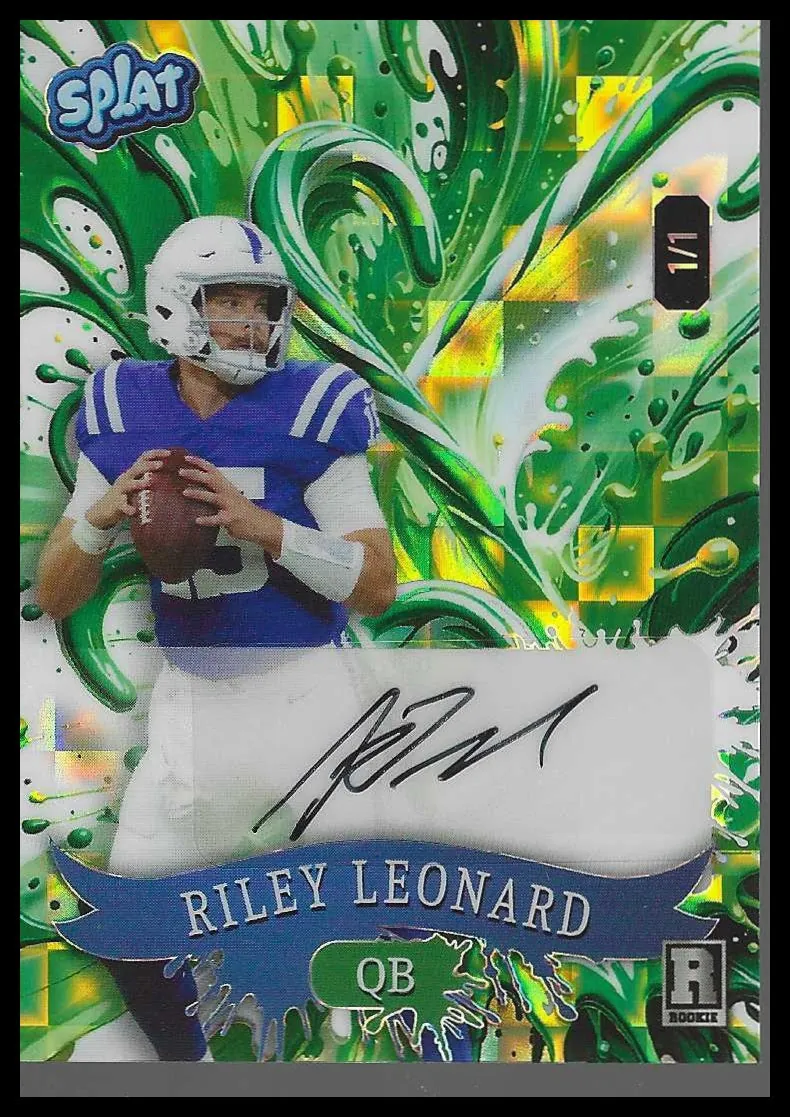
Slabs containing rookie autographs provide a double layer of authentication. The grading company verifies both the card's physical condition and the signature's legitimacy. This is the most secure way to own high-end modern assets. You can find a curated selection of these high-potential
graded slabs
in our current inventory.
The Stability of Vintage Slabs
Vintage rookie slabs are the foundational assets of the hobby. A mid-grade slab, typically between a PSA 4 and 6, of a legendary player is often a safer entry point than a Gem Mint modern prospect. The "Big Three" icons—Mickey Mantle, Hank Aaron, and Willie Mays—remain the most reliable targets for long-term holds. Their prices are driven by historical significance rather than weekly box scores.
When buying lower-grade vintage, prioritize "eye appeal." A card with a PSA 4 grade but perfect centering often sells for a premium over a poorly centered PSA 5. Centering is the most visible attribute and the hardest to find in 1950s and 1960s sets. Identifying these "high-end for the grade" slabs is a key skill for professional collectors.
Modern Strategy:
Target numbered parallels and licensed autographs to hedge against high print runs.
Vintage Strategy:
Focus on Hall of Fame icons and prioritize centering over technical grade.
Risk Management:
Allocate 70% of your capital to established legends and 30% to modern prospects.
High-Value Rookie Slabs at Veteran Sports Cards FL
Finding the
best rookie card slabs to buy
is a process that requires both technical knowledge and a reliable source for inventory. Veteran Sports Cards FL operates with a disciplined focus on curation. We understand that a slab is an investment. Our inventory is selected to meet the high standards of professional collectors who prioritize liquidity and technical accuracy. We maintain a rotating stock of PSA, BGS, and SGC graded assets to ensure our clients have access to the most respected labels in the industry.
Our collection spans the most significant categories in the hobby. We offer vintage baseball cards that have stood the test of time alongside high-potential modern football stars. Our Pokémon cards selection follows the same rigorous standards for condition and authenticity. Every item in our shop is handled with the precision expected of a veteran-owned business. We prioritize functional efficiency and clear communication throughout the purchasing process. This approach ensures that every transaction is handled with professional care.
Browse Our Graded Slabs Collection
Our digital storefront is organized for quick navigation and information retrieval. You can find dedicated sections for graded baseball cards and graded football cards. This categorical approach allows you to compare different grading standards and population counts within a single environment. We stock everything from mid-grade vintage icons to Gem Mint modern refractors. We focus on licensed products that maintain their value over long-term holds.
If you are ready to apply the criteria discussed in this guide, you can shop our full collection of
graded rookie slabs
. We ensure that every listing provides the transparency needed to make an informed decision. This includes clear images of the slab and accurate descriptions of the technical grade. We remove the guesswork from the buying process by providing all necessary data points upfront.
The Veteran Sports Cards FL Advantage
Operational excellence is the foundation of our service. We provide fast, secure shipping to national collectors who require prompt delivery of their assets. Our packaging methods are designed to prevent any movement or impact during transit. This maintains the integrity of the slab from our facility to your collection. We treat every order with the same level of organization and attention to detail found in our curated content.
We offer more than just individual slabs. Our clients have access to curated mystery packs and sealed packs & boxes. These products are sourced with the same attention to detail as our graded inventory. We avoid hyperbolic marketing. Instead, we focus on providing a straightforward, business-like experience. This commitment to service creates an atmosphere of security for the consumer. When you buy from Veteran Sports Cards FL, you're securing your next investment with a trusted curator who understands the nuances of the industry.
Build a Secure Card Portfolio
Success in the hobby depends on technical discipline. You now have the framework to navigate the consolidated landscape of PSA, BGS, and SGC. You can differentiate between high-liquidity modern parallels and the stable historical value of vintage icons. Utilizing population reports and technical grade thresholds allows you to mitigate the risks of overproduction. Identifying the
best rookie card slabs to buy
is the first step toward professional-grade collecting.
Veteran Sports Cards FL supports your collecting goals with a curated inventory of PSA, BGS, and SGC graded slabs. As a veteran-owned and operated business, we prioritize precision and operational excellence. We offer fast national shipping to ensure your assets arrive securely and promptly. Secure your next investment with a trustworthy curator who values order and technical accuracy. Take control of your collection today by exploring our latest acquisitions.
Browse the full Graded Slabs Collection
Frequently Asked Questions
Which grading company slab is best for resale value?
PSA is the industry leader for resale value and market liquidity. Its PSA 10 Gem Mint grade is the primary target for those looking for the best rookie card slabs to buy. While BGS and SGC have specific niches, PSA's dominant market share ensures the most consistent and highest realized prices on the secondary market. This demand is reinforced by the PSA Registry, which keeps prices stable for set collectors.
Is it better to buy a PSA 10 or a BGS 9.5 rookie card?
A PSA 10 generally outperforms a BGS 9.5 in resale price and buyer demand. Both are technically "Gem Mint," but the PSA Registry creates a higher floor for prices. A BGS 9.5 usually only rivals a PSA 10 if it is a "True Gem" with all subgrades at 9.5 or higher. For long term holds, the PSA 10 remains the more liquid asset.
Are SGC slabs good for modern rookie cards?
SGC slabs are an excellent choice for modern cards if you prioritize turnaround speed and cost efficiency. While they may not always reach PSA 10 price heights, they offer a professional, high-contrast display that collectors appreciate. Many investors now use SGC for modern basketball and football cards to avoid the lengthy backlogs and higher entry fees associated with other companies.
How do I check the population report of a graded slab?
Access the population report by visiting the grading company's official website and entering the certification number found on the slab's label. This data reveals how many copies of that card exist in that specific grade. It is a vital tool for verifying scarcity before finalizing a purchase. Understanding the "pop count" helps you identify if a card is a true condition rarity.
What is the difference between a rookie card and a prospect card in a slab?
A prospect card is released before a player reaches the major leagues, often featuring the "1st Bowman" logo. A rookie card is released during the player's debut professional season. Both are considered high value assets in the best rookie card slabs to buy. In baseball specifically, the 1st Bowman card often commands a higher premium than the official rookie card because it is the player's first licensed appearance.
Why do some rookie slabs have a "Qualifiers" (OC, ST, MK) label?
Qualifiers like OC (Off-Center) or ST (Staining) indicate that the card has a specific defect that prevents a standard numerical grade. These slabs are generally less desirable for professional investors. Most collectors prefer cards without qualifiers to ensure maximum liquidity. A card with a qualifier typically sells for significantly less than a straight grade of the same number.
Should I buy a slabbed rookie card or a raw one and grade it myself?
Buying an existing slab is the most secure method for building a collection. Grading raw cards carries the risk of receiving a low grade or discovering undisclosed alterations like trimming. Given the current industry backlogs, purchasing a pre-graded slab allows you to secure an asset immediately. You avoid the 40 to 50 business day wait times currently common for entry level grading services.
Do Pokémon rookie cards follow the same slab value trends as sports?
Pokémon 1st Edition and early holographic cards follow nearly identical value trends as sports cards. High grade slabs of iconic characters function as blue chip assets. They rely on the same grading standards and population scarcity to dictate their market price. Collectors treat early Pokémon releases with the same disciplined approach as vintage baseball, prioritizing technical condition and label authority.
Back to blog
Leave a comment
Name
*
*
Comment
*
Please note, comments need to be approved before they are published.